Walls, ceilings and old plaster
Drywall Repair in Port Washington, NY
Doorknob holes, hairline cracks, brown rings on the ceiling and tired old plaster, patched and smoothed until the spot disappears under the next coat of paint.
One call is enough for a drywall pro nearby to come over, look at the wall and name a price ahead of any work.
Symptom Key
Most calls begin with a small discovery. Someone carries laundry down the hallway one morning and notices a thin line running up from the corner of the bedroom door, or looks up from the couch and finds a faint brown ring that wasn't on the ceiling in spring. The mark itself usually says a fair amount about where it came from, and that decides what kind of repair it needs. The wall and ceiling care guides go further on the ceiling side.
Crack Above a Door Frame
A line that climbs from the top corner of a door or window is the house flexing, not failing. Doors swing and slam, framing shrinks and swells with the seasons, and the corner of an opening is where a wall gives first. Spackle buys a season; cutting a shallow groove, bridging it with tape and feathering compound over it is what keeps it from returning. The page on wall and ceiling crack repair goes deeper.
Raised Nail Heads
A row of small round bumps, spaced about a stud apart, are nails that have crept back out as the lumber behind them dried. Each one is set back or pulled, a screw is driven beside it, a little off the old hole, to pull the board snug, and the dimples are filled and sanded flat along with the rest of the wall.
Blistered Joint Tape
A long bubble, or a strip of paper you can lift with a fingernail, means the tape never stuck to the compound under it. Gluing it back rarely lasts. The loose run is cut out, the seam is re-taped in fresh compound, and the edges are feathered wide enough that a lamp across the room won't pick them out.
Tea-Colored Ceiling Ring
A yellow or brown ring with a darker rim is water that came through and dried. The leak gets found and stopped first, the mark gets a coat of shellac-based sealer so it can't ghost through new paint, and any board that went soft is cut out. There is more on that in the water-damaged ceiling section.
Bowed Ceiling Board
A ceiling that dips between the joists has either soaked up water or come loose from the framing. If it feels cool and gives under light pressure, the board is wet and has to come down. If it's firm, fresh fasteners and a careful finish may be all it needs.
Cutouts From Other Trades
A neat rectangle where a plumber reached a valve, a line of holes from an electrician fishing a cable, a gap around an outlet that moved. These openings are routine, and patching after a remodel or rewiring explains how they're closed so nobody can tell.
Garage and Cellar Walls
Picture the partition that divides an attached garage from the kitchen. One winter morning a car door swings a little too far, or a bike handlebar catches it, and now there's a dent by the light switch with a split in the paper face. It looks like any other hole, but that wall has a job the bedroom walls don't.
That partition is meant to hold back a fire, so a patch in it gets board of the same thickness and the same fire-resistant type as what came out, and every seam is taped and covered rather than left as a bare joint. A thin scrap of half-inch board and a dab of spackle is the wrong repair for that wall even if it looks fine afterward. The same goes for a garage ceiling with a bedroom above it.
Basements bring a different worry. On a peninsula with Manhasset Bay on one side and Hempstead Harbor on the other, damp lower levels are a familiar complaint, and gypsum board pulls water up from a wet floor like a wick. Once that has happened, the wet section is cut out a little above the highest stain line, the studs are left open to dry, and the wall is closed again only after a moisture meter says the framing is ready. Closing a wall too soon just seals the problem in, and the stain comes back with a smell.
Sometimes the water starts outside. If a lawn sprinkler has been soaking the foundation, turn it back toward the grass before the wall is repaired. The Port Washington Water District already limits lawn watering to alternate days by house number, and keeping that spray off the siding helps a repaired basement wall stay dry.
Services
Four kinds of work cover nearly every wall and ceiling call on the peninsula, and each gets a fuller write-up of its own.
Smooth Wall Patching
Holes, dents and old repairs blended into smooth plaster or board so the patch can't be found under paint.
Water-Damaged Ceiling Repair
Brown rings, soft board and sagging sections after a leak, with the stain sealed and the ceiling rebuilt.
Remodel and Electrical Patching
Openings from plumbers, electricians and renovations closed and finished to match the wall around them.
Wall and Ceiling Crack Repair
Settling cracks, seam lines and plaster cracks taped and finished so they stay closed through the seasons.
Plaster Versus Gypsum Board
Knock on a wall in one of the older houses near the harbor and it answers with a dull, solid thud. Knock on a newer partition and it sounds hollow. That difference matters more than anything else when a patch has to disappear.
Rail service reached the end of the Port Washington Branch in 1898 and set off a building boom, so plenty of houses here are old enough to have plaster walls: a hard finish coat over a base coat, troweled onto wood lath or, later, gypsum lath panels. Gypsum board took over in the decades after the war, and newer houses and additions are board throughout. Many homes have both, with original plaster in the front rooms and board in a kitchen that was redone.
Lath and Plaster
A hole in plaster is filled in layers with setting compound, which hardens by chemical reaction instead of drying, so it builds depth without shrinking. A large opening may get a piece of board shimmed out to plaster thickness, with the edges keyed in so the old finish doesn't crack away from the patch. Loose plaster around the hole is pinned back with plaster washers before anything is filled.
Half-Inch Board
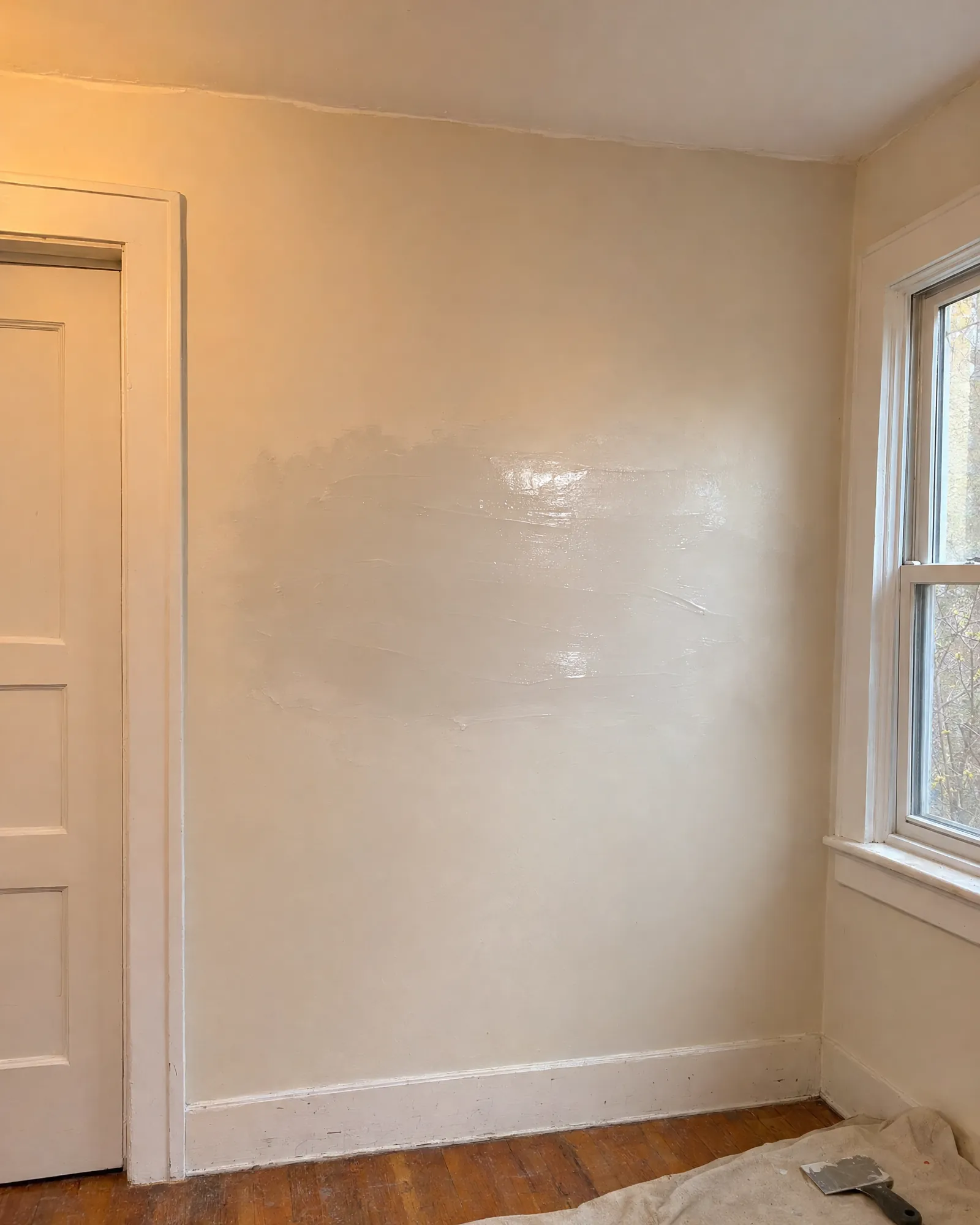
Board walls take a cut-in patch with backing strips, or a patch with its own paper flange, then tape and two or three coats of topping compound. On smooth walls the edges are feathered out a foot or more.
Smooth and Sprayed Finishes
Most walls here are smooth, the hardest finish to hide a repair in, because there's no texture to blur the edges. A smooth patch is skimmed and sanded until a work lamp laid almost parallel to the surface finds no ridge. Orange peel, knockdown and hand-troweled textures turn up in newer rooms and basements; those are copied by test-spraying on scrap board until the pattern and spacing line up.
Price Ranges
The national drywall cost guide from This Old House, updated in June 2026, puts a professional patch on a small hole at about $60 to $200, a crack repair at about $60 to $330 and a ceiling hole at roughly $320 to $1,300. Those are national figures, not a Port Washington price. What moves a quote on a given wall is plaster versus board, how smooth the finish must be, whether the work is overhead, and how many drying cycles the job needs.
Towns Around Manhasset Bay
The houses on the Cow Neck peninsula have a lot in common, and so do their walls. These are the places requests come from most.
The hamlet itself, from the streets around the station up to Beacon Hill, its high point at roughly 270 feet.
Detached houses, garden apartments in Soundview Village and the older homes along Mill Pond Road.
A small village on the Manhasset Bay side of the neck, close to downtown.
Big lots at the tip of the peninsula, many built up in the 1960s.
Colonial-style houses and postwar subdivisions along Port Washington's southern edge.
One and two stops down the branch line, with their own mix of older and updated homes.
Across the bay to the west, and past Flower Hill to the south.
The towns and villages covered page gives each one a few lines of its own.
Visit Day Order
Most people remember the morning of a repair as quieter than they expected. This is the usual order of things, though a large ceiling or a soaked basement wall stretches it out. The full repair process, from first call to paint-ready wall, has more.
- A close look first
The wall is studied in daylight and again under a lamp held close and almost parallel to the surface, which shows every ridge and dip around the damage. Plaster gets a light tap to find sections that have let go of the lath.
- The room gets covered
Drop cloths go down along the wall, furniture is moved back or wrapped, and for anything that needs sanding, plastic is taped across the doorway so the dust stays in one room.
- Opening up and prepping
Torn paper is cut back, ragged holes are squared off, wet or crumbling material comes out, and backing is screwed in wherever a patch needs something solid to hold.
- Coats of compound
Tape goes on first, then a fill coat, then a wider finish coat. Each one reaches farther past the last, so the repair tapers into the wall instead of sitting on top of it.
- Drying between coats
Small patches done with setting compound can often take a second coat at the same visit. Bigger repairs, ceilings and anything in a damp room usually need overnight drying and a return trip.
- Sanding and cleanup
The final coat is sanded, checked again under the work light, and primed or left ready for paint, whichever was agreed. Dust is vacuumed, the cloths are folded up and the furniture goes back where it stood.
Postwar and Newer Houses
Not every house here is an old colonial. After the Second World War, Flower Hill filled in with subdivisions built over former estates, farms and sand mines, and in the 1960s many houses in Sands Point went up on one-acre lots before the zoning there moved to two acres. Additions and rebuilt houses keep appearing across the peninsula, and newer walls fail in their own predictable ways.
Nail pops and small cracks at window corners are common in a house's first few heating seasons, while green studs and joists give up their moisture and shrink a little. They're worth fixing once the movement has slowed, all at once, instead of chasing them one at a time.
Then there's the gap that opens where an interior wall meets the ceiling in winter and closes again in summer. In a house with a trussed roof that's often truss uplift: the trusses arch slightly as their upper members dry out in a cold attic, and they lift the ceiling board off the top of the wall. Re-taping that corner just cracks it again. The lasting fix is to release the ceiling board from the trusses near the wall so it can float, then finish the corner so it can flex, or cover it with a molding fastened to the ceiling only.
Cow Neck Housing Notes
A few corners of the peninsula, and what their houses tend to mean for a repair.
Flower Hill Estates
Walter Uhl built many of the houses here in the colonial style, and some went up with wood salvaged from nearby barns. In houses of that age it's worth confirming whether a wall is plaster before anyone cuts into it, because a careless cut can crack old plaster well beyond the hole.
Mill Pond Road
Port Washington North created the Mill Pond Historic District along this road in 1973. Older interiors like these usually have original trim worth keeping, so repairs are made around the casings and baseboards instead of pulling them off.
Soundview Village
The garden apartment complexes here put many rooms behind shared walls, and units turn over. Move-out patching is the usual request: anchor holes, a dented outside corner, the dent where a doorstop used to be. Small repairs like these are worth grouping into one visit.
Sands Point Lots
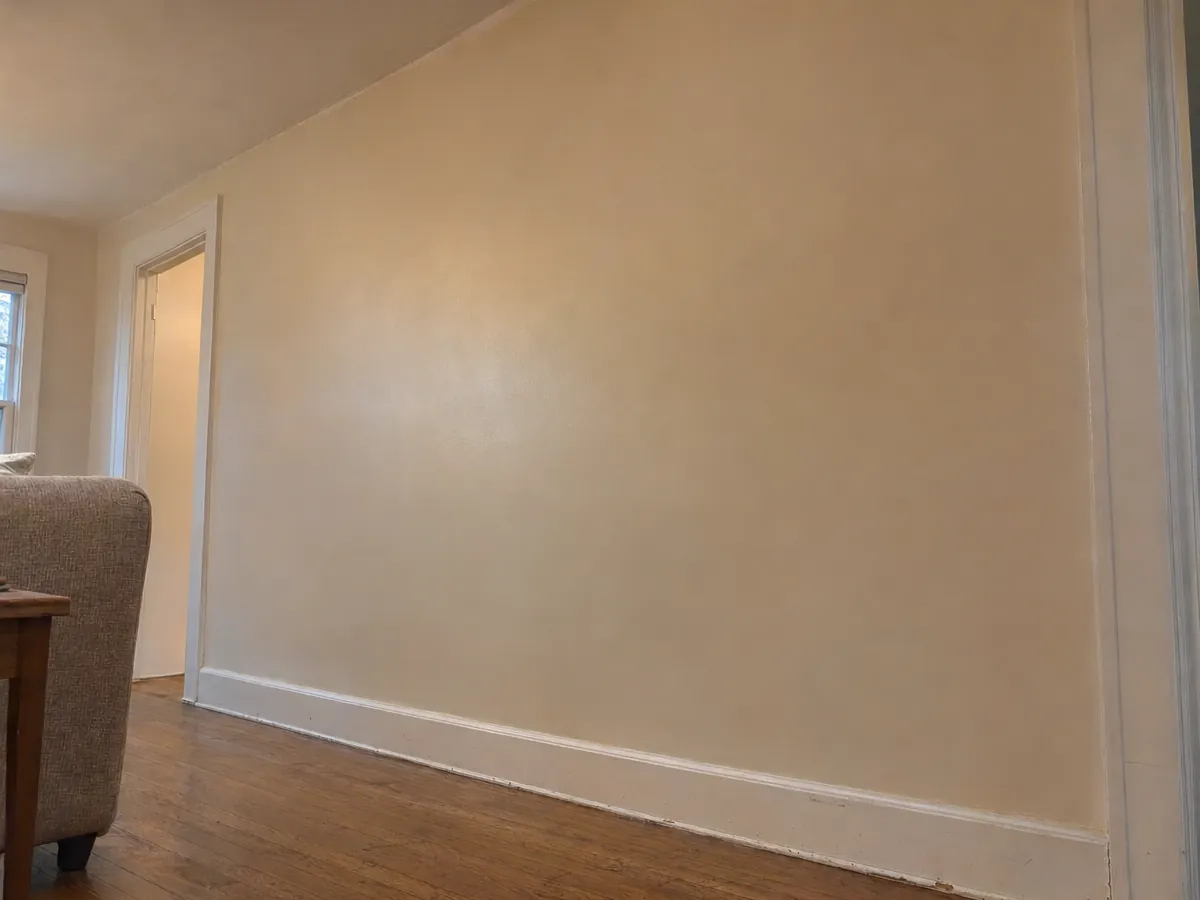
Houses on big lots tend to have big rooms, long walls and tall windows. Strong light raking across a wide smooth wall is the toughest test a patch can face, so the feathering goes wider and the final check happens with the shades open.
Quote Requests and Calls
If there's a stain on the ceiling or a hole in the hallway you keep meaning to deal with, the next step is small. Ring the number below or text over a snapshot, tell us which room, and a drywall pro from around here stops by to size it up and put a price on it, all ahead of any actual work.
The person pricing your repair stands in the room with it first, and nothing starts until you've said yes to the number.
Call 7 days, 7am–9pm